Mastering Botanical Art with the Realistic Rose Procreate Stamp
The landscape of digital illustration has shifted dramatically in recent years. What was once a niche hobby for tech-savvy artists has evolved into a robust professional ecosystem, driven by powerful tablets and intuitive software. Within this expanding creative economy, efficiency and aesthetic precision are paramount. Artists, designers, and content creators are no longer just looking for tools that allow them to draw; they are seeking assets that accelerate their workflow without compromising on quality. This is where specialized resources like the Realistic Rose Procreate Stamp become indispensable. By integrating high-fidelity botanical elements directly into the digital canvas, creators can bridge the gap between hand-drawn authenticity and modern production speed.
The demand for realistic floral imagery is not a new phenomenon, but its application has changed. In the past, incorporating detailed roses into a design might have required hours of manual shading, layering, and texturing. Today, the expectation for rapid turnaround times—whether for social media content, wedding invitations, or product packaging—means that artists must leverage smart tools. A dedicated stamp set allows for the immediate placement of complex organic shapes, freeing up mental energy for composition, color theory, and storytelling rather than repetitive rendering.
The Evolution of Digital Botanical Illustration
Botanical art has always required a keen eye for detail. The structure of a rose, with its overlapping petals, subtle gradients, and delicate thorns, presents a significant challenge even for experienced illustrators. Traditionally, mastering this subject meant years of practice with watercolors or oils. With the advent of digital platforms, the barrier to entry lowered, but the time commitment remained high. Early digital brushes often lacked the nuance required for true realism, resulting in flat or cartoonish outputs that failed to meet professional standards.
As tablet technology advanced, particularly with the introduction of pressure-sensitive styluses and high-resolution displays, the potential for realistic digital painting grew. However, the workflow bottleneck persisted. Creating a single, photorealistic rose from scratch could take hours. This inefficiency led to the development of specialized asset libraries. The Realistic Rose stamp for procreate represents the next logical step in this evolution. It is not merely a shortcut; it is a refinement of the artistic process. These stamps are crafted from high-quality source images or meticulously painted originals, ensuring that every petal curve and shadow falls naturally. This allows users to maintain the integrity of realistic art while adapting to the fast-paced demands of modern client work.
Enhancing Workflow Efficiency for Professionals
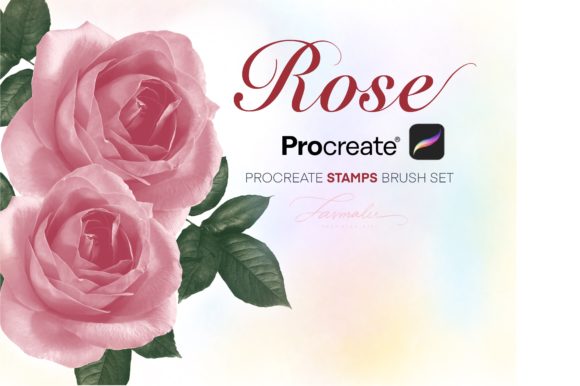
For freelancers, agency designers, and entrepreneurs, time is a direct currency. The ability to produce high-quality visuals quickly can determine profitability and client satisfaction. Integrating a comprehensive brush set, such as one containing 14 Rose stamps and 8 Leaf stamps, transforms the creation process. Instead of building a floral arrangement element by element, an artist can drag and drop pre-rendered, high-resolution components onto the canvas. These elements can then be customized—rotated, resized, recolored, or blended—to fit the specific needs of the project.
This approach aligns with the broader trend of modular design in creative industries. Just as web developers use code libraries to build sites faster, digital artists use asset packs to construct illustrations more efficiently. The practical implications are significant. A graphic designer working on a spring campaign for a beauty brand can test multiple layout variations in minutes rather than days. A wedding stationer can offer clients a wider variety of custom floral motifs without increasing their production timeline. This flexibility enhances competitiveness and allows creatives to take on more projects or dedicate more time to high-value conceptual work.
Technical Requirements and Compatibility
To fully leverage the capabilities of these advanced digital assets, users must ensure their hardware and software environment is optimized. The Realistic Rose Procreate Stamp is designed specifically for the Procreate ecosystem, which is renowned for its natural drawing engine and user-friendly interface. However, not all devices support the full range of features required for high-fidelity stamping and layering.
Users should note that this brush set is exclusively compatible with the Procreate app. To ensure smooth performance and access to all functionalities, the following requirements must be met:
- iPad Pro or iPad: While standard iPads can run Procreate, the iPad Pro offers superior processing power and display accuracy, which is beneficial when working with detailed, high-resolution stamps.
- Apple Pencil: Precision is key when positioning and blending stamps. The Apple Pencil provides the necessary pressure sensitivity and tilt recognition to integrate these elements seamlessly into hand-drawn backgrounds.
- Procreate Version 5.0 and higher: Newer versions of the app include improved brush engines, layer management, and blending modes that enhance the usability of complex stamp sets. Using an outdated version may result in compatibility issues or reduced functionality.
Adhering to these specifications ensures that the stamps render correctly and that the user experience remains fluid. Investing in the right tools is as important as selecting the right assets, as technical limitations can hinder creative expression.
Applications Across Industries
The versatility of realistic floral stamps extends beyond traditional illustration. Their application spans various industries, reflecting the widespread appreciation for natural aesthetics in contemporary design.
Branding and Marketing: Brands in the wellness, beauty, and lifestyle sectors often utilize floral imagery to convey elegance, purity, and organic quality. High-resolution rose stamps allow marketers to create consistent visual identities across social media posts, email newsletters, and packaging designs. The ability to quickly generate unique floral compositions helps maintain fresh content without the cost of custom photography or illustration for every asset.
Education and E-Learning: Educators creating digital materials for biology, art, or literature classes can use these stamps to enhance visual engagement. Realistic botanical elements can make educational content more appealing and easier to understand, particularly when illustrating plant structures or historical contexts involving flora.
Personal Projects and Hobbyists: For hobbyists, the accessibility of professional-grade tools democratizes creativity. Individuals interested in digital journaling, greeting card design, or personal art projects can achieve stunning results without extensive training. The Realistic Rose stamp empowers users to express their creativity confidently, fostering a deeper engagement with digital art as a form of personal fulfillment.
Best Practices for Natural Integration
While stamps offer convenience, achieving a cohesive and professional look requires thoughtful application. Simply placing a stamp on a canvas can result in a disjointed image if not handled with care. Here are some recommendations for integrating these assets effectively:
- Adjust Opacity and Blending Modes: Rarely will a stamp look perfect at 100% opacity straight out of the library. Experiment with blending modes like Multiply, Overlay, or Soft Light to integrate the rose with the underlying textures and colors of your artwork.
- Customize Colors: Use Procreate’s hue, saturation, and brightness adjustments to match the rose to your project’s color palette. This ensures that the floral elements feel like part of the original composition rather than pasted-on additions.
- Add Hand-Drawn Details: To maintain an organic feel, add subtle hand-drawn lines or shadows around the stamped elements. This bridges the gap between the digital asset and the rest of the illustration, creating a unified visual language.
- Vary Scale and Orientation: Avoid repetition by rotating and resizing the 14 Rose stamps and 8 Leaf stamps. Natural floral arrangements are rarely symmetrical or uniform. Introducing variation creates depth and visual interest.
By treating these stamps as foundational elements rather than final products, artists can maintain their unique style while benefiting from the efficiency they provide. This balanced approach respects both the tool and the craft, ensuring that the final output remains authentic and engaging.
The Future of Digital Asset Utilization
As digital tools continue to evolve, the line between pre-made assets and original creation will likely blur further. We are seeing a trend toward hybrid workflows, where AI-generated elements, photographic textures, and hand-drawn strokes coexist. In this context, high-quality, curated assets like the Realistic Rose Procreate Stamp serve as reliable anchors. They provide a standard of quality that is difficult to achieve consistently through automated means alone.
For creators, staying adaptable is crucial. Embracing tools that enhance productivity without sacrificing artistic integrity will define success in the coming years. The shift toward efficient, asset-based workflows is not a replacement for skill but an amplification of it. By mastering the integration of realistic stamps, artists can focus more on concept, emotion, and narrative—the aspects of art that truly resonate with audiences.
In conclusion, the Realistic Rose stamp for procreate is more than a convenience; it is a strategic resource for modern digital creators. It addresses the need for speed, quality, and versatility in a competitive market. Whether you are a seasoned professional looking to streamline your pipeline or a hobbyist eager to explore botanical art, understanding how to effectively utilize these tools can significantly elevate your creative output. As technology continues to shape the artistic landscape, those who learn to harmonize traditional skills with digital efficiencies will find themselves best positioned to thrive.